
Pruning roses is never an easy thing to do, but it’s necessary if you want to see your rose bushes bloom even bigger in the following.
Ludwig & Halmar takes a look pruning your rose bushes effectively and making sure that you get the most out of your roses.
The images below should give an indication of how to prune the different rose types:
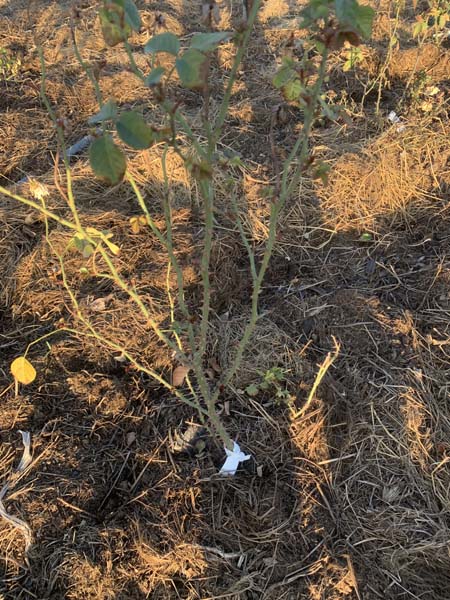
A recently planted rose, that is still relatively immature.

After having been pruned, only a knee high single stem is left.
.jpg?g=1625392992688)
Climbing ‘Iceberg’ trained onto a wire before the prune.
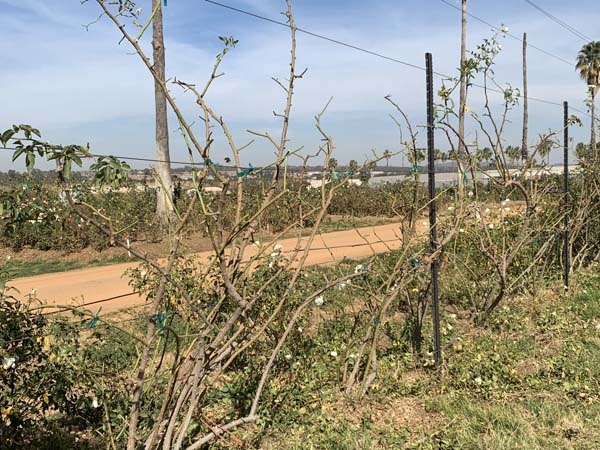
The climbers after their prune. Note the short stubs left on the trained canes.
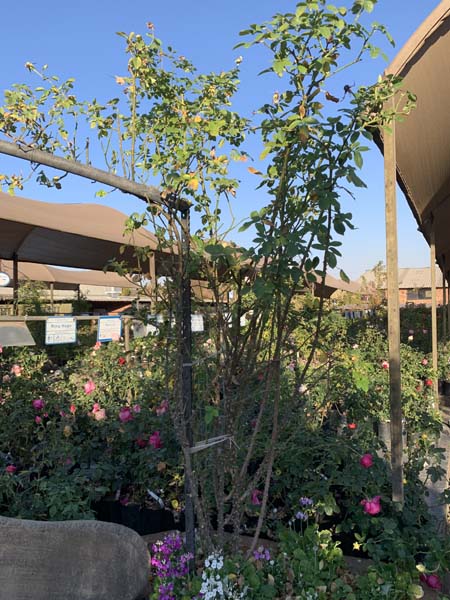
‘Blondy’ a PanaRosa that was trained onto and over an arch.
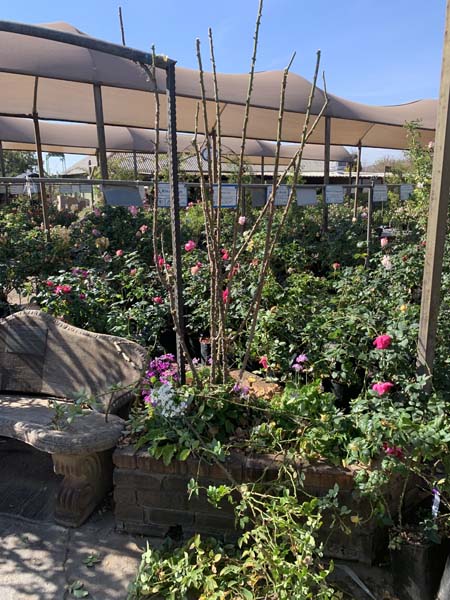
Nicely cleaned up and only slightly shortened.

‘Iceberg’ before.
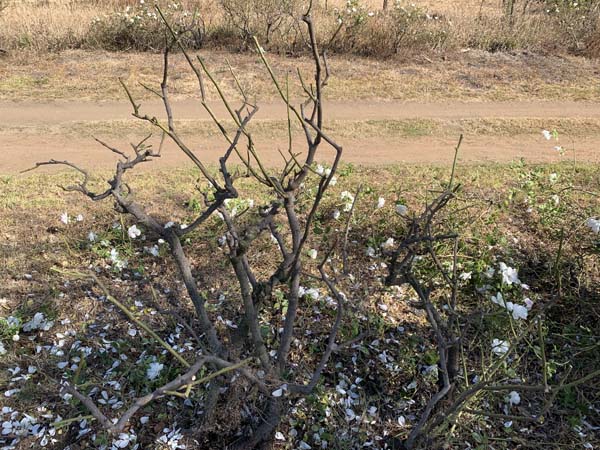
Halfway done.
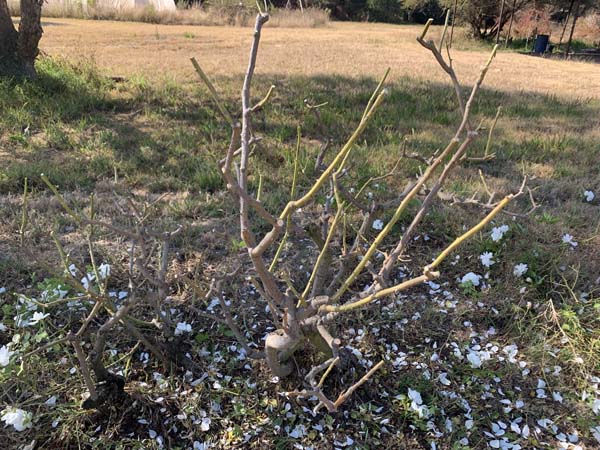
The pruning artwork, once done…
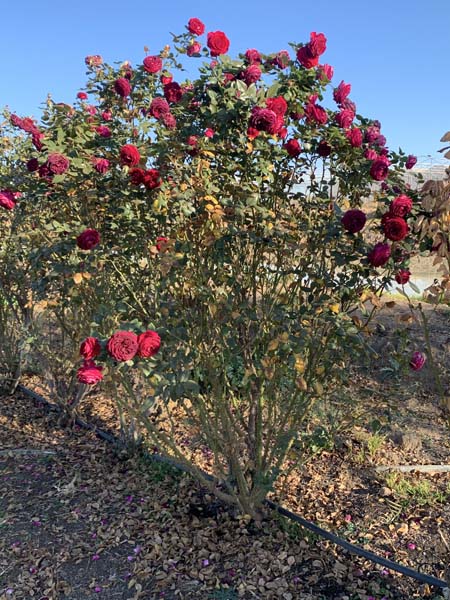
‘Carmine GrandiRosa’ looks intimidating to prune.
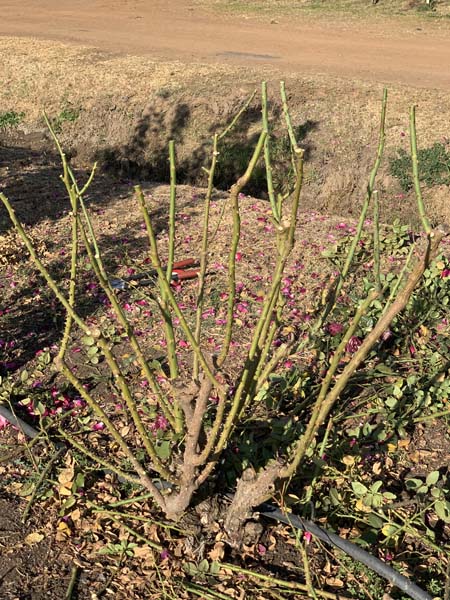
Once you get going, it really isn’t at all.
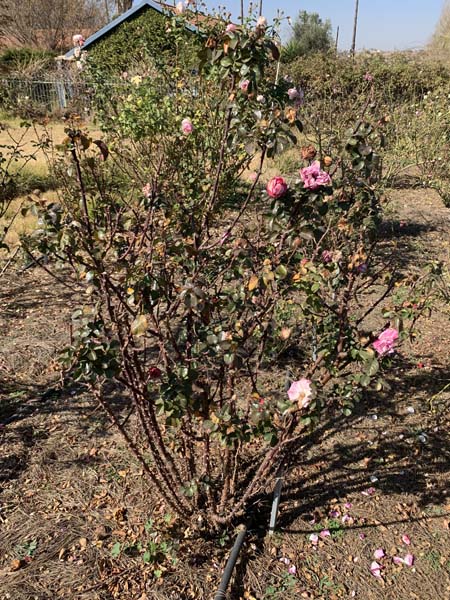
When pruning a well established plant…
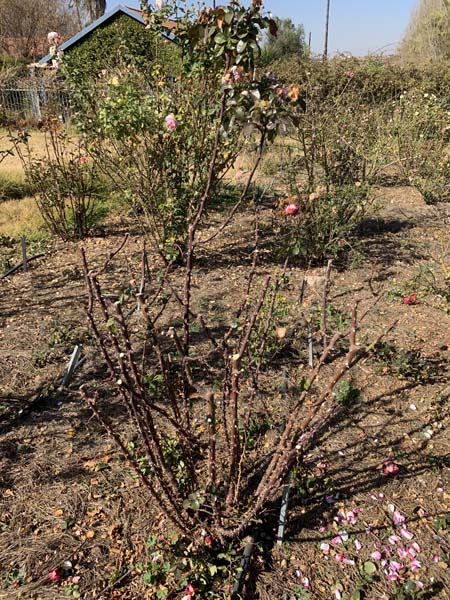
… you simply start by cutting each stem shorter by about 40cm…
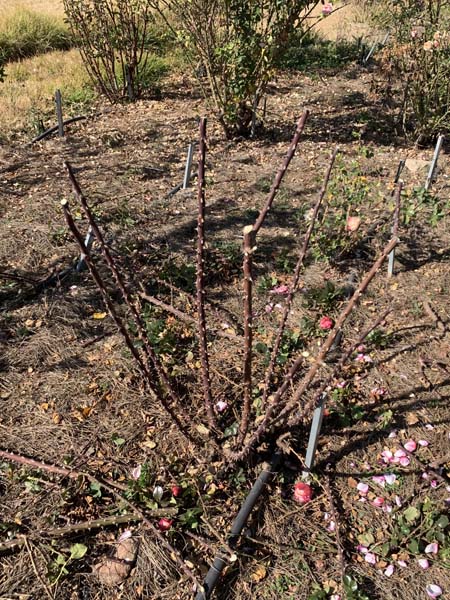
…then you select the main stems that are to remain,
cut out the rest and remove side branches.
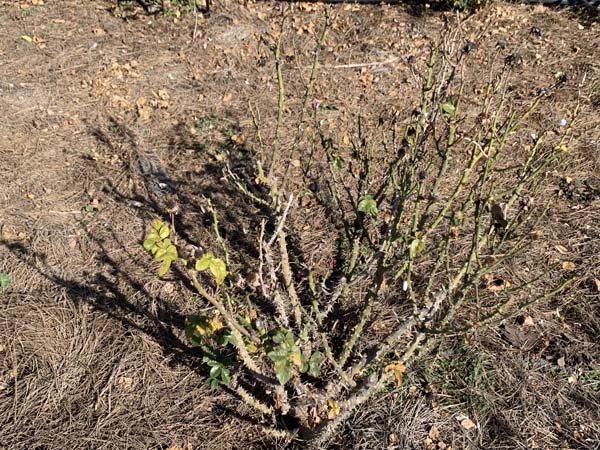
Even this plant with so many side shoots is easy to prune.
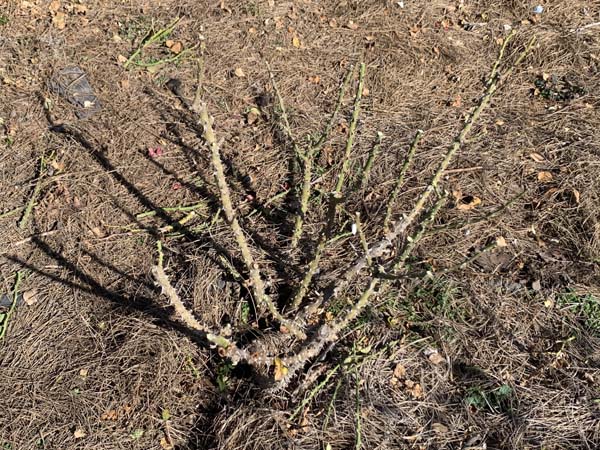
You simply shorten each shoot.
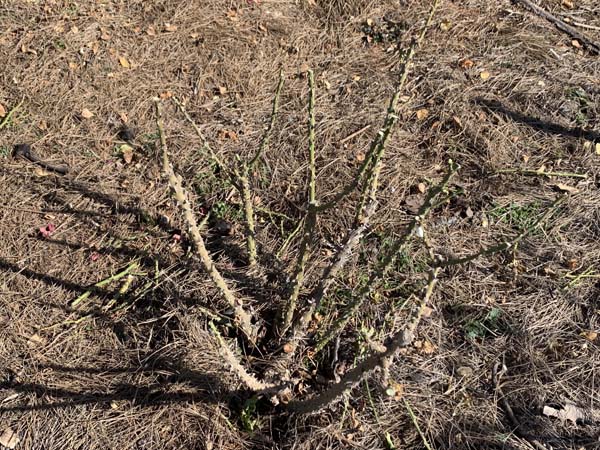
Then you shorten somewhat more, select the main stems that are to remain
and cut out all the side shoots.
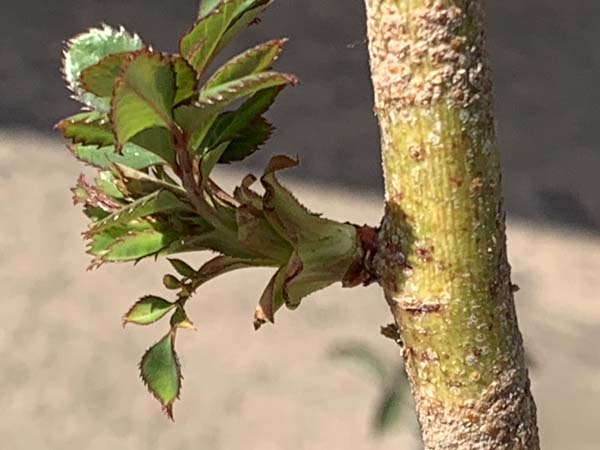
Scale is usually an indication that the rose’s roots are unhappy.
If you notice pernicious scale on the stems of your rose whilst pruning, specially on the older wood, you know that either the soil has compacted over time or the irrigation water is not draining properly due to clay soil.
In both cases, ultimately, the best thing is to work in compost and rough organic material i.e. peanut shells to amend the soil.
The scale on the lower parts of the stem will not be alive, so one can easily wipe them off with a cloth or even a brush. The insects further up the stem are probably alive and thriving.
However as mentioned, the main solution is to tend to the soil.